

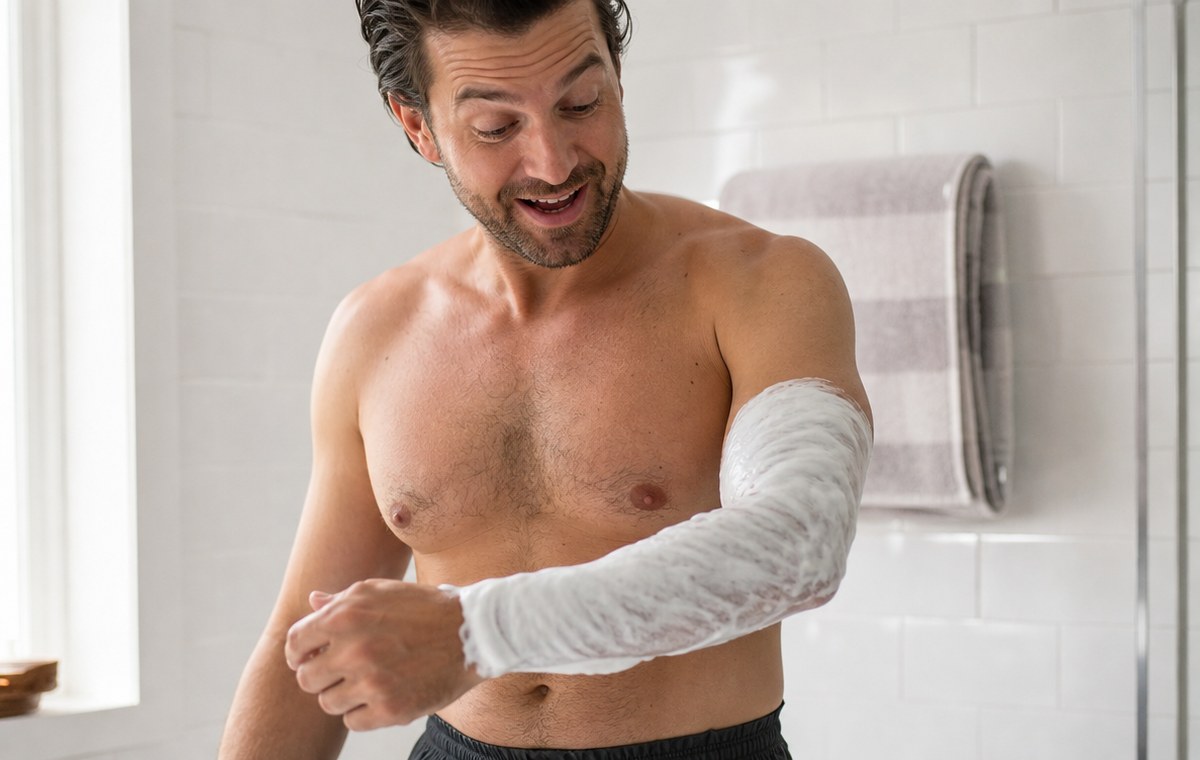
The Reach Problem Nobody Says Out Loud
A razor is a precision tool designed for a surface you can see and hold taut. That describes a jaw. It does not describe a back, and it barely describes a chest.
Men who shave their chest end up doing it in a mirror, at an angle, over curved surfaces with a blade that wants a flat one. Men who want their back done either ask a partner, book an appointment, or give up. Most give up, and then quietly mind it.
This is the practical reason the category moved. It was never mainly about smoothness. It was about the fact that the standard tool physically cannot do half the job.

A blade is designed for a flat surface held taut. A back is neither, which is why most men never solve it with one.
What A Blade Does To Skin That Is Not A Face
Facial skin is used to being shaved. It has been trained by years of it. Chest, back and shoulder skin has not, and it responds accordingly: razor burn, small red bumps, and the itch that arrives about two days later when everything starts growing back.
That itch is not incidental. A cut hair regrows with a flat, sharpened end instead of the soft tapered one it had before. Against a shirt, thousands of those feel like exactly what they are, and some of them curl back into the skin rather than growing out of it.
This is also where the myth comes from. Shaving does not make hair grow back thicker. The follicle under the skin is untouched by a blade. What changes is the shape of the tip, and a flat tip feels coarse in a way a tapered one never did.
Shaving does not change hair width, growth rate or density. The follicle below the skin is untouched by a blade. What changes is the shape of the tip.
The Thing Nobody Expects To Care About
Two things come up constantly from men who switch, and neither is the one they expected.
The first is definition. Body hair scatters light and softens edges. Remove it from a chest or an arm and the shape underneath reads more clearly. Men who train notice this within about ten seconds, and it is the single most common surprised comment in the category.
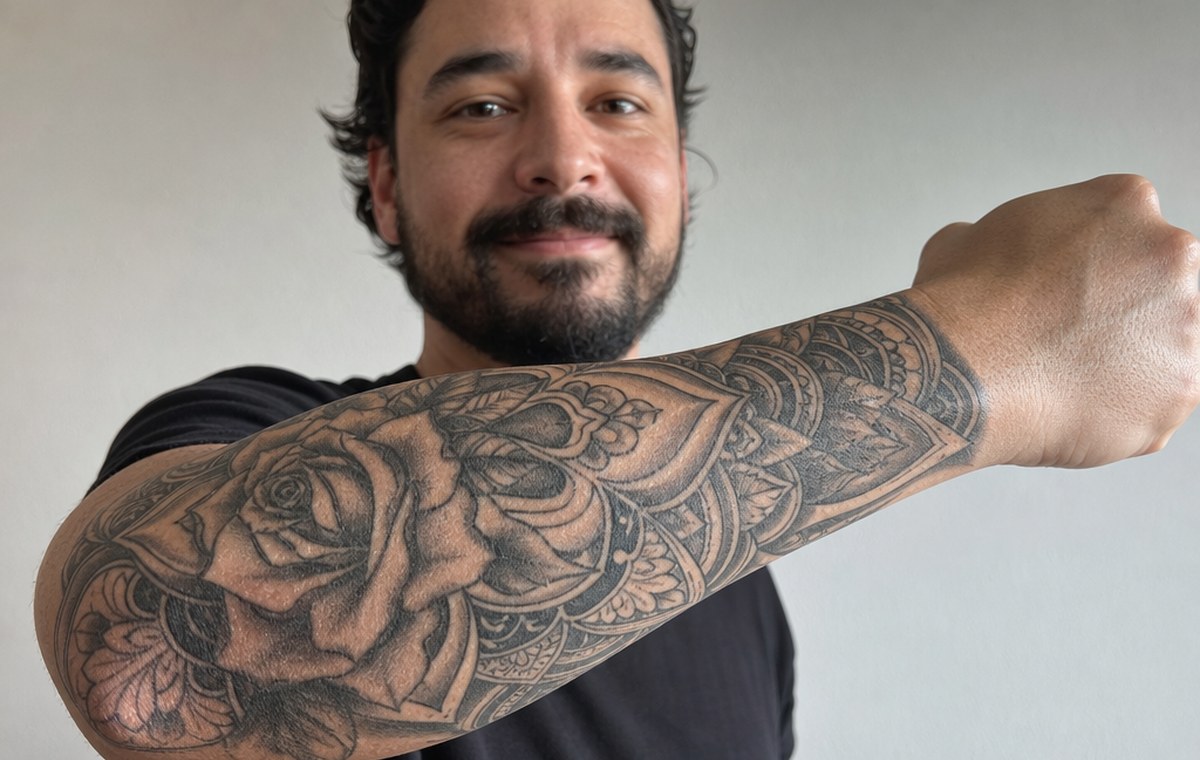
The second is tattoos. A sleeve or a chest piece that has been growing hair through it for years looks like a different piece of work when it has not. If you paid for line work, you may as well be able to see it.
What A Depilatory Foam Actually Does Differently
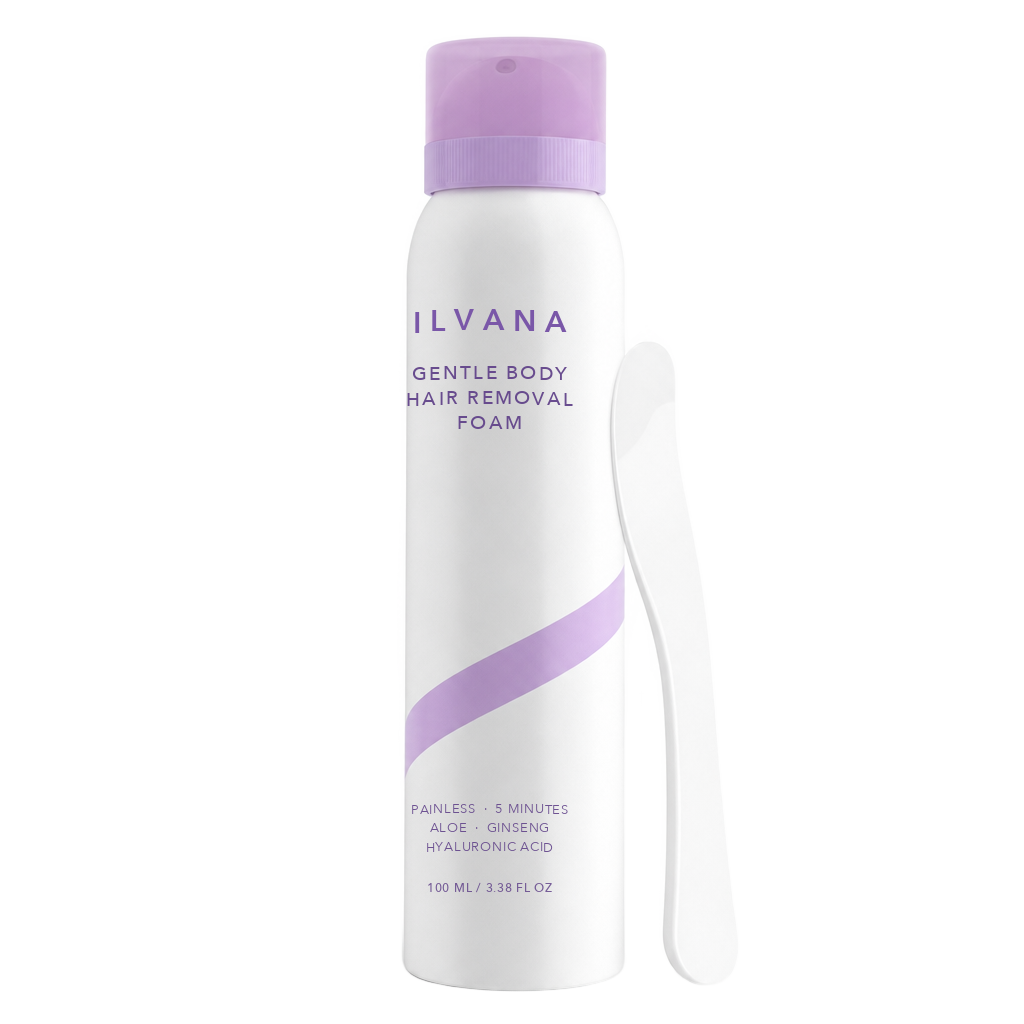
It does not cut the hair. A thioglycolate active breaks the sulphur bonds holding the hair's keratin together, so the hair softens and lifts away at the skin line. Nothing is sliced off above the surface, so no blunt tip is left behind to itch or to curl back.
The practical difference for a man is coverage. Foam sprays onto an area rather than being dragged across it, so a chest takes about a minute and a back takes about twenty seconds with someone else holding the can. Then you wait, wipe it off with the scraper and rinse.
The trade is that you have to respect the clock. Five minutes on most areas, up to ten on genuinely coarse hair, and no more than that. Set a timer.
Removal happens at the skin line rather than above it, so regrowth arrives tapered rather than sharp and does not read as stubble against a shirt.
Timings By Area, Because A Chest Is Not An Underarm
Skin thickness is not uniform, and the same five minutes does not suit every part of you.
Chest, back and shoulders take five to eight minutes. The hair is coarse but the skin handles it well. Arms and legs are the straightforward five. Underarms are thinner skin and often freshly shaved, so start at four and do not push it.
For anywhere more sensitive than that, stay at the short end and never go past five minutes. And do a patch test on your inner forearm once before your first full session. It takes five minutes and it is the difference between knowing and finding out.