


The Story Is Always Told The Same Way
Ask a room of adults about hair removal cream and you will get the same story back with different details. Someone tried it once, in their teens, usually on their legs, usually without reading anything. It smelled appalling. It stung. Some of them still have a mark.
That story is so common it has become the reason people will not try the category again. It is worth being precise about what went wrong, because it was almost never the product being fundamentally unsafe. It was three specific, avoidable things, and the same three things every time.
The first was time. The second was skin that was in no state to be treated. The third was the area it was used on. None of those are mysteries, and none of them require a different chemistry to solve.
A depilatory works on keratin. Hair is keratin and so is the outermost layer of your skin, which is why contact time is the variable that separates a clean result from an irritated one.
What Is Actually Happening While It Sits There
Hair holds its shape with disulphide bonds: sulphur atoms bonded to each other, cross-linking the protein chains inside the strand. They are the reason a hair is strong enough to pull on.
A thioglycolate salt at an alkaline pH breaks those bonds. As they go, the hair loses its structure and softens until it can be wiped off rather than cut. Crucially, that happens at the skin line, so nothing is sliced off above the surface and no cut end is left behind.
This is not an exotic process. It is the same class of chemistry that has been used in hair removal creams for decades, and the reason it has stayed in use is that it works.
Nothing is cut above the surface, so no flat tip is left behind. The tip a blade leaves is the shape most ingrown hairs start from.
The Clock Is Not A Suggestion, It Is The Safety Margin
Here is the part that the bad stories all have in common. The chemistry does not distinguish between the keratin in your hair and the keratin in the outermost layer of your skin. It works on both. The reason it is safe is that it works on the hair much faster.
Over five minutes it has cleared the hair and barely touched you. At ten it has dealt with coarse hair and is at the limit. Left for twenty, it is no longer working on the hair, because the hair is already done. It is working on you.
Almost everyone with a scar story left it on far longer than the instructions said, usually because it did not seem to be doing anything yet. That instinct is the single most expensive one in this category.
Five minutes clears the hair. Ten is the ceiling for coarse hair. Past that the active is no longer working on the hair, because the hair is already done.
What Has Actually Changed Since Then
The active has not changed much, and honest brands will tell you so. What has changed is everything around it: the format, the scent, and what else is in the tin.
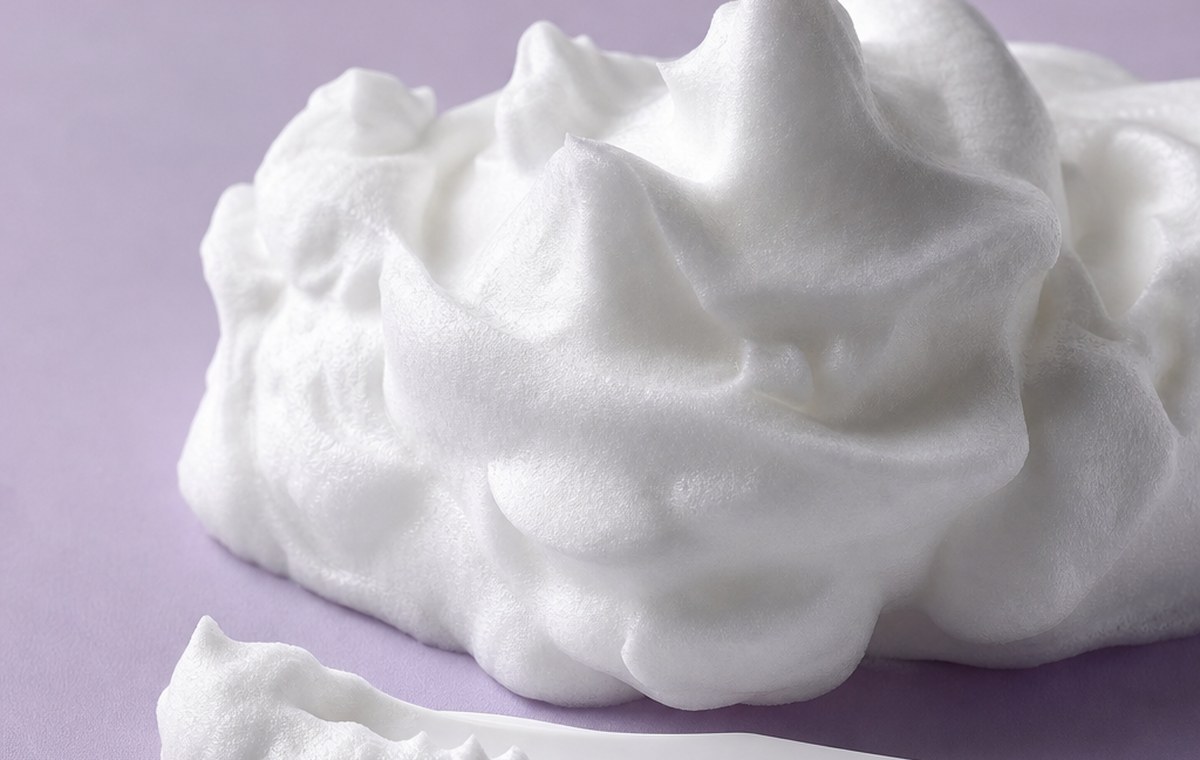
Format matters more than people expect. A foam spreads in an even layer and is easy to see, which means fewer thin patches that fail and fewer thick patches that sit too long. It also reaches a back or a shoulder blade, which a person with one hand and a mirror cannot do well with a tube.
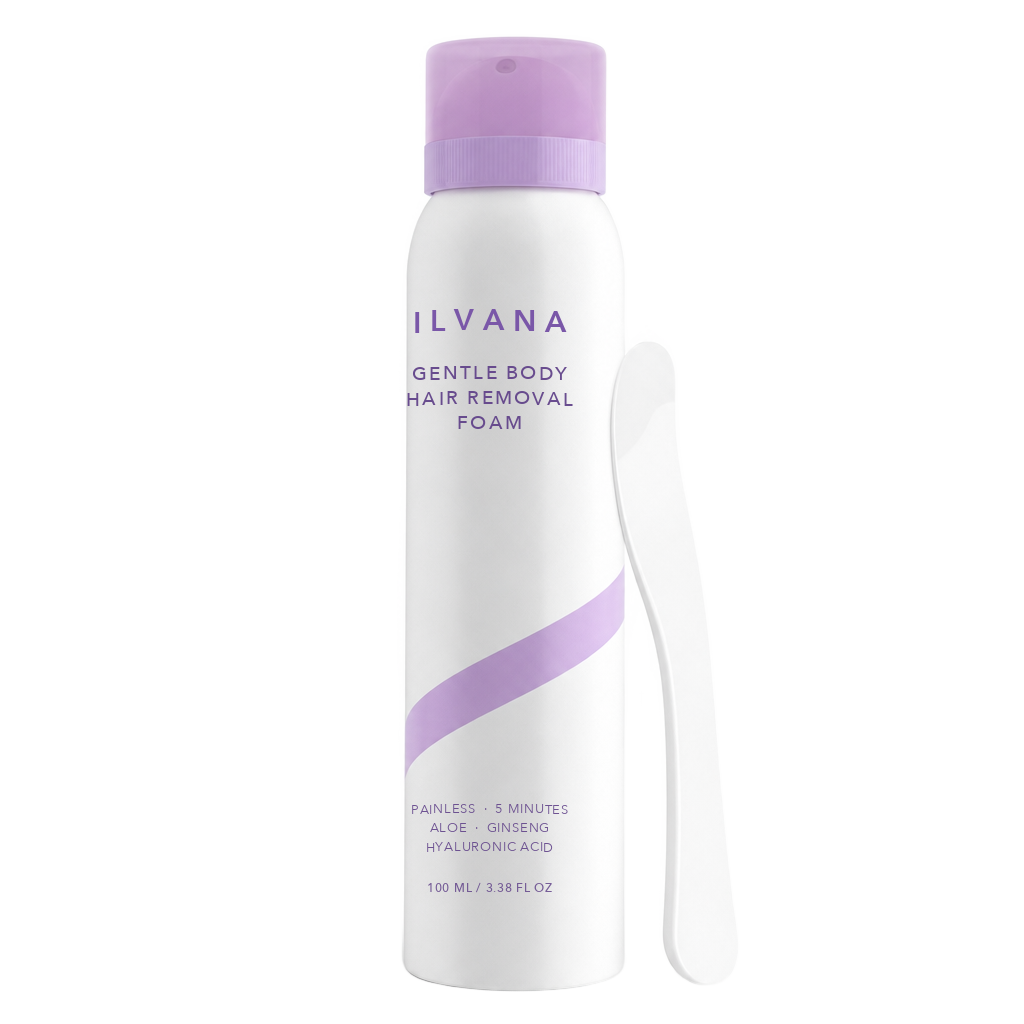
The second change is what goes on alongside the active. Aloe vera, ginseng, purslane and centella asiatica are all long-standing soothing botanicals, and putting them in the same foam means the skin has something on its side during the five minutes rather than getting an apology afterwards. Sodium hyaluronate does the water-holding part, which is the difference between skin that feels tight after a session and skin that does not.
And the smell is better. Not absent. Better. Any brand that tells you their depilatory is odourless is hoping you will not open it.
The Five Minute Test That Prevents The Whole Story
If you take one thing from this article, take the patch test, because it costs five minutes once and it is the reason the bad version of this story does not happen to you.
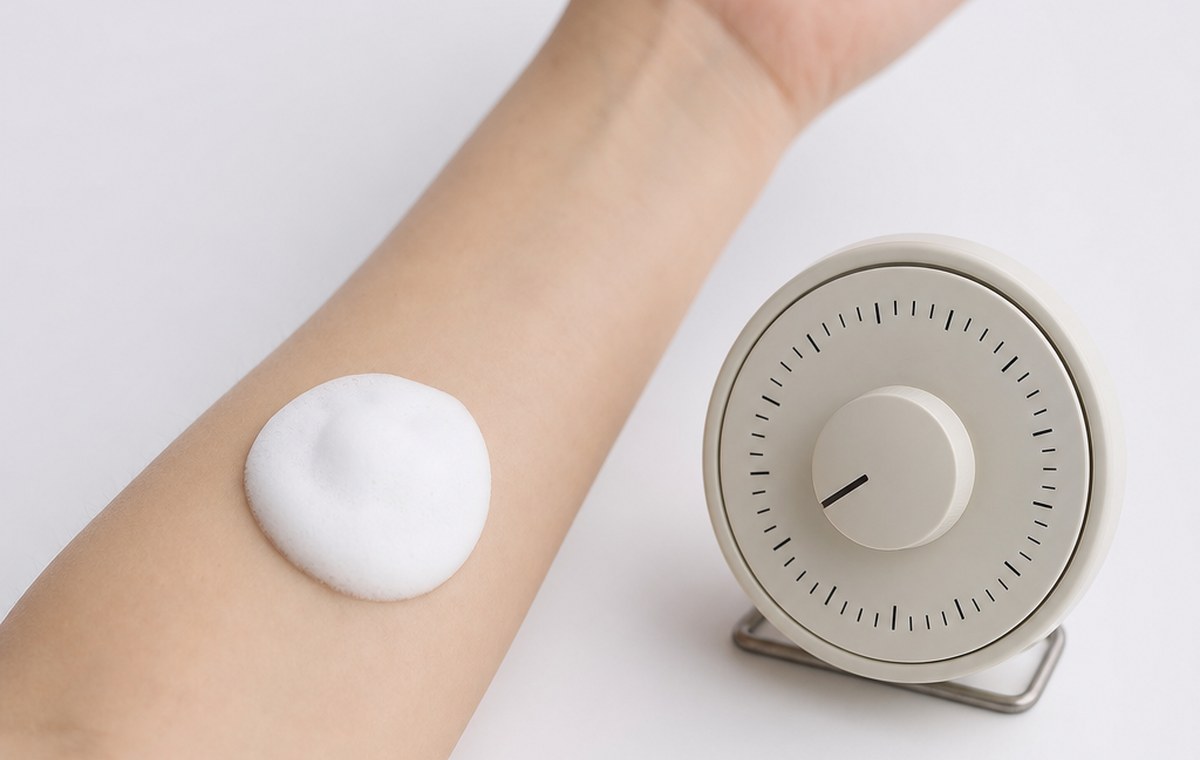
Put a patch the size of a coin on the inside of your forearm. Leave it five minutes, wipe it off, rinse it, and look at the skin again the next day. Slight pinkness that settles within an hour is ordinary. Persistent redness, itching or a burning feeling is not, and it means this method is not for you.
Then, when you do a real session, respect three rules. Start on clean dry skin, because foam on wet skin slides and works unevenly. Set an actual timer rather than guessing. And leave three or four days of growth first, because the product needs something to work on.